
According to the latest analysis by the market intelligence provider Appfigures, in the first quarter of 2026, the global distribution of Apple Stock and Google Play increased by 60 per cent per year. At the end of the iOS, the percentage is even as high as 80 per cent. By April 2026, the total number of applications issued by the two major shops had increased by 104 per cent compared to the same period last year, and the iOS end by 89 per cent.
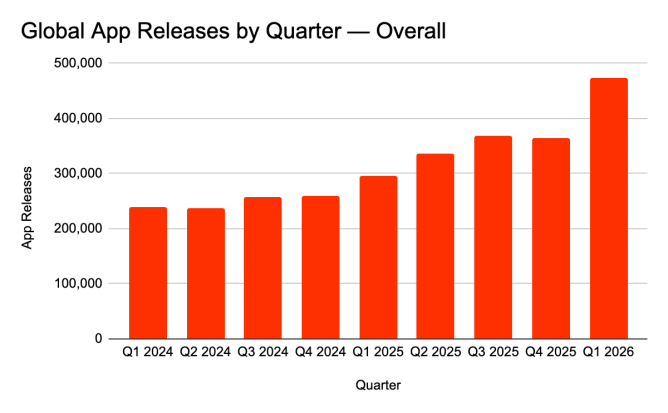
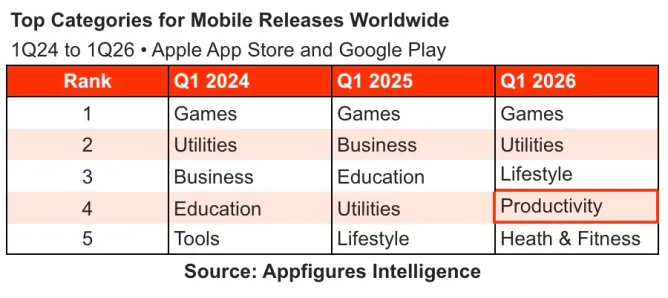
With the rise of AI agents, there are concerns that users may eventually abandon mobile phone applications. The New York Times also reported last year that new computing platforms (e.g. smart glasses, environmental computing devices, or an AI reimaginable smart watch) may exceed the potential of smartphones. OpenAI is even working with a well-known apple designer, Johnny Evie, to develop an AI hardware device. There is, however, another possibility: AI has lowered the threshold for the development of applications and has made it easier for anyone to create applications, thereby contributing to the revival of the app store. This new application of gold-mining fever may be led by developers with innovative but lacking mobile software design skills. The data from Appfigures show that there are far more new releases for some types of applications than for others. As of the first quarter of 2026, mobile games continued to dominate the release of new applications globally. But the “productivity” application has reached the top five this year. The “tools” category has also risen to the second and the “life” application category has risen from fifth place last year to third place. Finally, the “Health and fitness” applications are among the top five.
An AI-driven tool such as Claude Code or Reflit may be a backstop for the proliferation of new applications. In addition, the industry appears to be at some point at the threshold of AI availability, and these tools can easily be used without development experience to build the mobile applications it wants more quickly. The proliferation of new applications that need to be reviewed may be behind some of the recent failures of this technology giant. This week, apples were awarded an incentive to use Freecash for violation of regulations, which had been fast up on the store’s list and had been in the top five for months. Apple was also caught by a maliciously encrypted currency application called the Leedger Live clone, which stole $9.5 million in encrypted currency from the victim ‘ s account. While such high-profile issues may have a negative public relations impact on App Store, apples still devote considerable effort to shielding and rejecting dangerous or waste applications. An analysis of apples in 2024 showed that over 17,000 applications of “beacon marketing” irregularities had been removed or rejected in that year; over 320,000 applications had been rejected as garbage messages, copying other applications or misleading; and action had been taken to prevent over 37,000 potential fraudulent applications from going on board App Store.

If the AI-enabled “climate code” is indeed a backstop for the recent surge in applications, then the demand will only grow as more and more new applications enter the market (not all applications are benign).

Related Posts